By Michael Spann, MD — Double Board-Certified Aesthetic Plastic Surgeon | Little Rock Plastic Surgery, P.A.
The most common question I’m asked in consultation isn’t about implants. It isn’t about size. It’s about recovery.
“How long will I be down?” “When can I drive?” “When can I lift my kids?” “When can I get back to the gym?”
These are the questions that actually determine whether a patient moves forward, and they deserve honest, specific answers. So I’m going to walk you through exactly what recovery looks like after breast augmentation at my practice in Little Rock — hour by hour for the first day, then day by day for the first two weeks, then milestone by milestone through the first year.
I’ll also explain why recovery looks different depending on the technique used. The traditional breast augmentation many of you have read about is not the same procedure I perform today. The Motiva Preservé technique — which I’m currently the only plastic surgeon in Arkansas certified to perform — has fundamentally changed what “recovery” means for the right candidate.
Quick answer: most of my breast augmentation patients are off prescription pain medication within 24 to 48 hours, back to desk work within 3 to 5 days, and back to full activity at four weeks. Preservé candidates often recover faster than that! Many are walking around comfortably the same afternoon.
Jump to the recovery phase you’re asking about:
- The first 24 hours after surgery
- Days 2–7: the first week
- Weeks 2–6: returning to activity
- Months 2–12: the long-term recovery
- How Motiva Preservé changes the recovery timeline
- What slows recovery down (and how we prevent it)
- FAQ: the questions I get most often
The First 24 Hours After Breast Augmentation
Surgery day — the procedure itself
Breast augmentation at my AAAASF-accredited surgery center on Rodney Parham Road is performed under general anesthesia and typically takes approximately one hour. Patients arrive in the morning, the procedure is performed, they wake up in our recovery area, and they go home the same day with a designated driver. There is no overnight hospital stay.
My incisions are typically 2.5 cm (about an inch), placed in the inframammary fold (the natural crease beneath the breast). The implant is placed in the subfascial plane — above the pectoralis muscle, beneath the fascia layer that drapes over it. This placement is the single biggest reason my patients recover faster than they expect.
The first few hours at home
Once you’re home, you’ll be sleepy. Most patients nap for several hours. You’ll be wearing a soft post-surgical bra (we provide this), and you’ll have a small amount of swelling and tightness in the chest. Pain at this stage is best described as soreness — similar to having done a hard upper-body workout the day before.
I want patients up and walking the same evening. Short, slow walks around the house every two hours. This is not optional — early ambulation dramatically reduces the risk of blood clots and actually speeds the resolution of swelling. Most patients feel well enough to go out to dinner.
Pain management in the first 24 hours
I use a long-acting local anesthetic during surgery that keeps the surgical area numb for 18 to 24 hours after you wake up. By the time it wears off, the worst of the initial inflammation has already started to subside. Most patients take one or two doses of prescription pain medication on the day of surgery and then transition to over-the-counter ibuprofen and acetaminophen by the next morning.
If you wake up the morning after surgery and feel like you could run errands — that’s not unusual. That’s by design. The technique, the placement, and the medication protocol are all built to get you back to feeling like yourself as quickly as possible.
Days 2–7: The First Week of Breast Augmentation Recovery
Day 2 — the turning point
Day 2 is when most patients realize this is going to be easier than they were prepared for. Swelling peaks around 48 to 72 hours after surgery, then begins to decline. You’ll feel tight across the chest, especially when you raise your arms, but the sharp soreness from day 1 is gone.
You can shower at this point. You’ll wear your post-surgical bra continuously, only removing it to shower.
Days 3–5 — the “I feel almost normal” phase
By day 3, most patients are off prescription pain medication entirely. You’re walking comfortably, eating normally, sleeping (on your back), and starting to get restless. This is a good problem to have, and also a dangerous one — the temptation to do too much too soon is real.
During this window you should:
- Sleep on your back, slightly elevated, with pillows supporting your arms
- Take short walks around the house and yard several times a day
- Avoid lifting anything heavier than a gallon of milk
- Avoid raising your arms above shoulder height
- Stay hydrated and eat protein-rich meals to support healing
Days 5–7 — returning to work
Most desk-job patients return to work between day 5 and day 7. If your job is physically demanding — nursing, teaching young children, anything involving lifting — you’ll need closer to two weeks before you return at full capacity, and we’ll talk about a modified return-to-work plan during your follow-up.
Your one-week post-op visit happens at our Rodney Parham office. I’ll examine your incisions, confirm the implants are settling correctly, and clear you for the next phase of recovery.
Weeks 2–6: Returning to Activity After Breast Augmentation
Week 2
By the end of week 2, you can drive (assuming you’re off all pain medication), return to most non-strenuous work, and begin light walking for exercise. You’re still wearing your support bra continuously, including at night.
Weeks 3–4 — gentle exercise returns
Around week 3, I clear most patients for stationary cycling, the elliptical, and brisk walking. Lower-body strength training can resume with light weights — no overhead movements, no chest exercises, no impact.
This is when patients start to see the implants “drop and fluff” — the technical term for the implants settling into their final position as the surrounding tissue relaxes. The result looks more natural week over week.
Weeks 5–6 — full clearance
At your six-week post-op visit, you’re cleared for everything: chest exercises, running, lifting children, sleeping on your stomach, going braless. The internal healing is largely complete. Most patients tell me by week six that they’ve stopped thinking about the surgery entirely — it just feels like part of their body.
Months 2–12: The Long-Term Recovery
Months 2–3
Residual swelling continues to resolve. The implants continue to settle. The scar at the inframammary fold transitions from pink and slightly raised to flat and increasingly pale. I have most patients begin scar treatment (silicone sheets or gel) around the 4-week mark and continue for several months.
Months 6–12
By six months, what you see is essentially the final result. The scar continues to fade for a full year — by 12 months, most of my patients’ inframammary scars are difficult to find without looking specifically for them.
There’s no “shelf life” on recovery — at the one-year mark, your breast augmentation is fully integrated, the tissue has remodeled around the implant, and you should expect a stable, predictable result going forward.
How Motiva Preservé Changes the Recovery Timeline
Everything I described above is the recovery for a traditional, well-executed subfascial breast augmentation. It’s already significantly faster and more comfortable than what most patients are prepared for.
Motiva Preservé takes it further.
Preservé is a tissue-preservation technique I’m currently the only plastic surgeon in Arkansas certified to perform. Instead of cutting through the breast’s natural ligament structure to create the implant pocket, specialized instruments gently separate and preserve those structures. The implant is nested within the breast’s existing support system rather than within a pocket cut into it.
The practical result on recovery:
- Most Preservé patients are walking around comfortably within hours of leaving the surgery center
- Many take little to no prescription pain medication at all
- Return to desk work is often possible within 1-2 days
- Light activity resumes within a few days rather than a few weeks
- Full clearance for chest exercises still requires 6 weeks — the implant itself needs time to integrate regardless of how it was placed
Recent published data on the Preservé technique has reported a 0% rate of inferior implant malposition at three years and capsular contracture rates under 1% — both meaningful improvements over the historical numbers for traditional breast augmentation.
Three days down. Then one day down. Now? Recovery evolved.
What Slows Breast Augmentation Recovery Down (And How We Prevent It)
The patients who recover slowest are almost always doing one of these things:
Skipping the post-surgical bra. The bra is not cosmetic — it’s structural. It controls swelling, supports the implants in the correct position while tissue heals, and reduces tension on the incision. Wear it as directed.
Returning to upper-body activity too soon. Lifting, reaching, and pushing recruit the pectoralis muscle and the surrounding chest wall. Doing this before the tissue has stabilized causes inflammation, prolongs swelling, and can affect the final position of the implant.
Smoking or vaping. Nicotine constricts the blood vessels supplying the healing tissue. I require patients to be nicotine-free for at least four weeks before and after surgery — this is non-negotiable in my practice.
Inadequate hydration and protein intake. Healing tissue requires fluid and amino acids. The patients who track their water and protein intake recover measurably faster.
Sleeping on the stomach or side too early. Pressure on the implants in the early weeks can shift them out of position. Back sleeping for the first 4–6 weeks is one of the most important compliance items in recovery.
Breast Augmentation Recovery FAQ
Optimized for FAQPage schema markup and AI search extraction. Use each Q/A pair as a structured-data entry.
How long does breast augmentation recovery take?
Most patients are off prescription pain medication within 24 to 48 hours, back to desk work within 5 to 7 days, cleared for light exercise around week 3, and cleared for full activity at six weeks. With the Motiva Preservé technique, the early phases of recovery are typically faster — many patients return to desk work within 2 to 3 days.
When can I drive after breast augmentation?
Once you are completely off prescription pain medication and can comfortably check your blind spot without restriction — typically between days 5 and 7.
When can I shower after breast augmentation?
Most patients can shower beginning on day 2. Specific instructions on incision care will be reviewed at discharge.
When can I work out again after breast augmentation?
Walking is encouraged starting the day of surgery. Lower-body strength training and stationary cardio resume around week 3. Chest exercises, running, and high-impact activity are cleared at the six-week post-op visit.
Is breast augmentation recovery painful?
Most patients describe it as soreness or tightness rather than pain. The procedure is performed under general anesthesia with a long-acting local anesthetic that keeps the area numb for the first 18–24 hours. Most patients transition to over-the-counter ibuprofen and acetaminophen within 24 to 48 hours.
How much time off work do I need for breast augmentation?
Five to seven days is typical for desk-based work. Physically demanding jobs may require closer to two weeks at full capacity. Patients undergoing the Motiva Preservé technique often return to desk work within 2 to 3 days.
When can I lift my kids after breast augmentation?
Lifting more than a gallon of milk should be avoided for the first 2 weeks. Lifting a small child (under 25 lbs) is generally cleared between weeks 3 and 4. Full lifting clearance is given at the six-week visit.
When can I sleep on my stomach after breast augmentation?
Back sleeping is required for the first 4 to 6 weeks. Side sleeping is typically permitted around week 4. Stomach sleeping is cleared at the six-week post-op visit.
Why is recovery faster with Motiva Preservé?
Preservé is a tissue-preservation technique that uses specialized instruments to separate and preserve the breast’s natural ligament structure rather than cutting through it. Because less tissue trauma is created, there is less inflammation, less swelling, and faster return to normal activity. Dr. Michael Spann is currently the only plastic surgeon in Arkansas certified in the Preservé technique.
Where does the recovery happen?
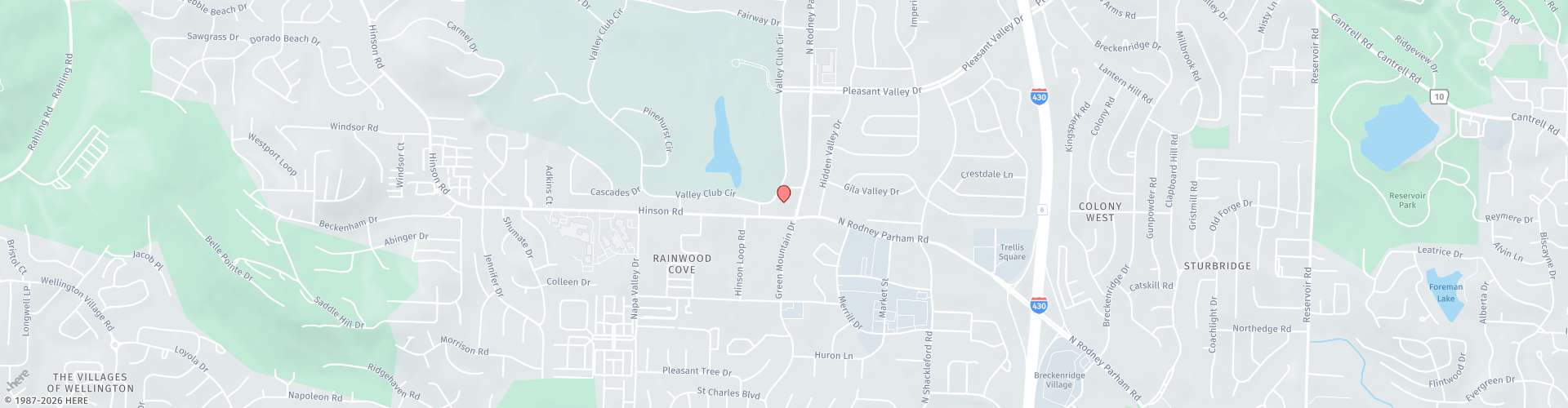
Surgery is performed at Little Rock Plastic Surgery’s AAAASF-accredited surgery center at 2200 N. Rodney Parham Rd. in Little Rock. Recovery is at home; follow-up visits are at the same office.
Ready to talk about what your recovery would actually look like?
Every patient is different. Anatomy, lifestyle, work demands, and goals all shape what “recovery” means in practice. The best way to know what your timeline would look like — and whether you’re a candidate for the faster Preservé recovery — is to come in for a consultation.
Call (501) 219-8000 or request a consultation online. Kristy at the front desk will get you scheduled.
Michael Spann, MD, is a double board-certified plastic and reconstructive surgeon and the founder of Little Rock Plastic Surgery, P.A. He is currently the only plastic surgeon in Arkansas certified to perform the Motiva Preservé breast augmentation technique. His practice operates from an AAAASF-accredited surgery center in Little Rock and a satellite office in Northwest Arkansas.