When a patient asks me why recovery after a Preservé breast augmentation tends to be gentler than the horror stories they’ve read about online, they usually expect me to talk about the implant. And the implant matters — a soft, modern SmoothSilk shell behaves differently in the body than what we were putting in twenty years ago.
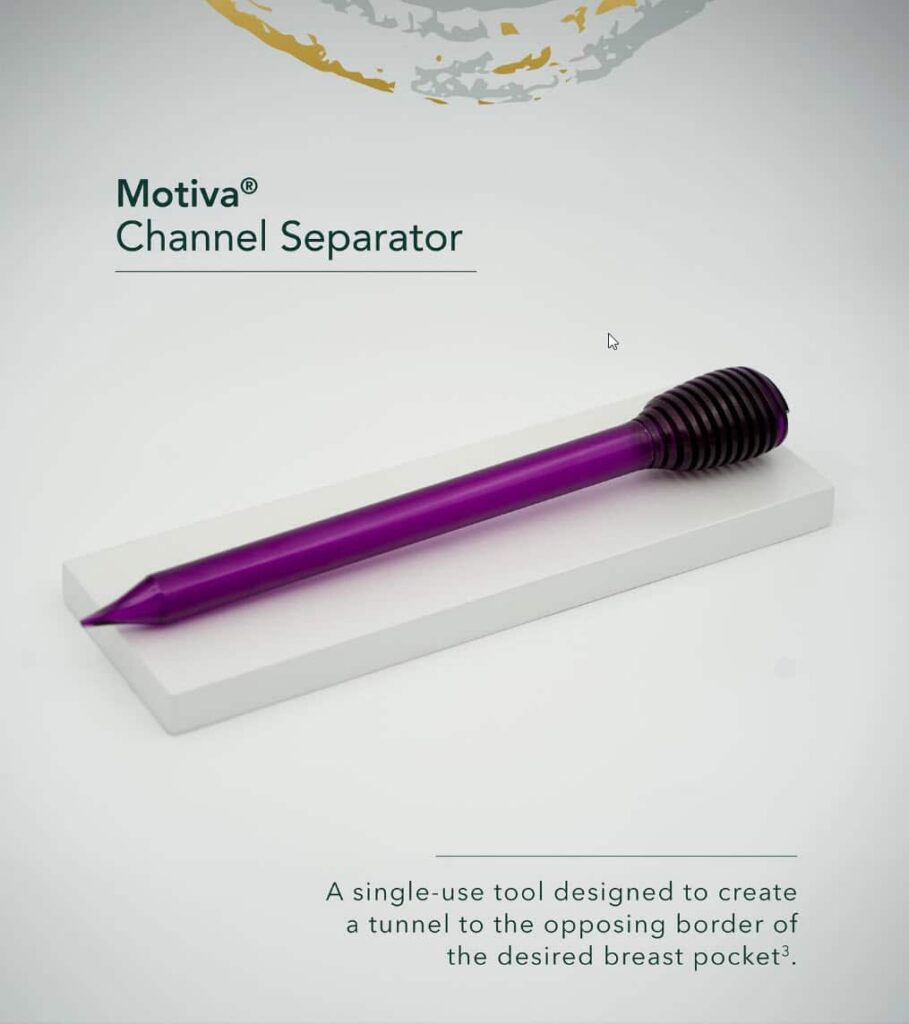
But honestly, the part of the operation I think about most isn’t the implant at all. It’s a blunt little instrument that doesn’t even cut: the channel separator.
Let me explain why a surgeon would get this sentimental about a tool whose whole job is to not slice anything.
What I was trained to do — and what I do differently now
I came up doing breast augmentation the way most of us were taught. You make your incision, and then you create the pocket by dissecting — separating tissue with cautery and instruments, cauterizing bleeders as you go, and, if you’re going under the muscle, releasing the lower attachments of the pectoralis to let the implant sit where it should.
It works. I did it thousands of times and got beautiful results. But every step in that paragraph has a recovery cost. Cautery leaves a raw internal surface. Released muscle is unhappy muscle — that deep, bruised, “an elephant is sitting on my chest” ache patients describe for the first week comes largely from disrupting the pec. And every vessel you divide is a little more swelling, a little more bruising, a little more time before someone feels like themselves again.
For years I assumed that was just the price of the operation. The channel separator made me question that assumption.
What the instrument actually does
Instead of cutting a pocket open, the channel separator parts the tissue. Through a small fold incision, it works along the natural planes of the breast — think of opening a path between the strands of a rope rather than slicing the rope in half. Then I use the inflatable balloon to gently, gradually expand that space into a precise pocket, and the implant goes in through a no-touch insertion sleeve so I’m never handling it against skin.
No muscle release. Far less cautery. The nerves, the blood supply, and the ligaments that hold the breast together are largely left where nature put them. (For the record, in the U.S. these tools are used together with FDA-approved Motiva SmoothSilk implants — I always like to be precise about that.)
Why I think that adds up to an easier recovery
This is the part that’s my clinical opinion, so I’ll own it as that. When I look at what the separator lets me avoid, the faster recoveries I’m seeing make mechanical sense to me:
Less bleeding means less of the swelling and deep bruising that keep people sore and stiff. Leaving the perforating vessels and sensory nerves intact seems to protect both comfort and nipple sensation. A smaller raw surface area inside means less inflammation for the body to clean up, and — I suspect — a lower risk of the kind of fluid collection that can stretch out recovery. And not releasing the muscle removes what I genuinely believe is the single biggest source of early postoperative pain in traditional augmentation.
None of that is magic. It’s just less trauma. And the body recovers from less trauma faster. That’s the whole thesis.
A few patients who changed how I talk about this
A schoolteacher came to me having delayed augmentation for years — she couldn’t picture taking two weeks away from a classroom of seven-year-olds. We did her Preservé on a Thursday. She texted me Sunday night a little shy, asking if it was “okay” that she felt good enough to go back Monday. I told her to take it easy, but yes. She taught that week. A few years ago I’d have told her to plan for a much longer runway.
Another patient was a labor-and-delivery nurse and a mom of three, which means she has roughly zero tolerance for being slowed down. What stuck with me was her two-week follow-up: she said the thing that surprised her most wasn’t that the pain was manageable, it was that there wasn’t much to manage. She’d braced for the chest-tightness her friends had warned her about and it never really showed up. That conversation is a big reason I started paying attention to the muscle-release piece specifically.
And then there’s the skeptical-spouse genre, which I get a lot of. One husband sat in the consult with his arms crossed, certain this was marketing. He emailed me himself about ten days post-op – not his wife, him – basically to say he’d been wrong about how quickly she was up and around. I keep that one in my back pocket for the next skeptic.
What I tell every patient to keep me honest
I’d be a poor surgeon if I let you walk away thinking the separator is a guarantee. Recovery is individual. Some people bruise more, heal slower, or have anatomy that calls for a different approach entirely, and not everyone is a candidate for a tissue-preservation technique in the first place. I’ve had patients who took longer than I expected, and I’d rather set that expectation up front than oversell you a timeline.
But when people ask me what’s really behind the recoveries they keep hearing about, I don’t point to a single sexy piece of technology. I point to the boring blunt instrument that lets me get the implant where it needs to go without tearing the rest of the breast apart to do it.
Two decades in, that still feels like the right trade.
—MS