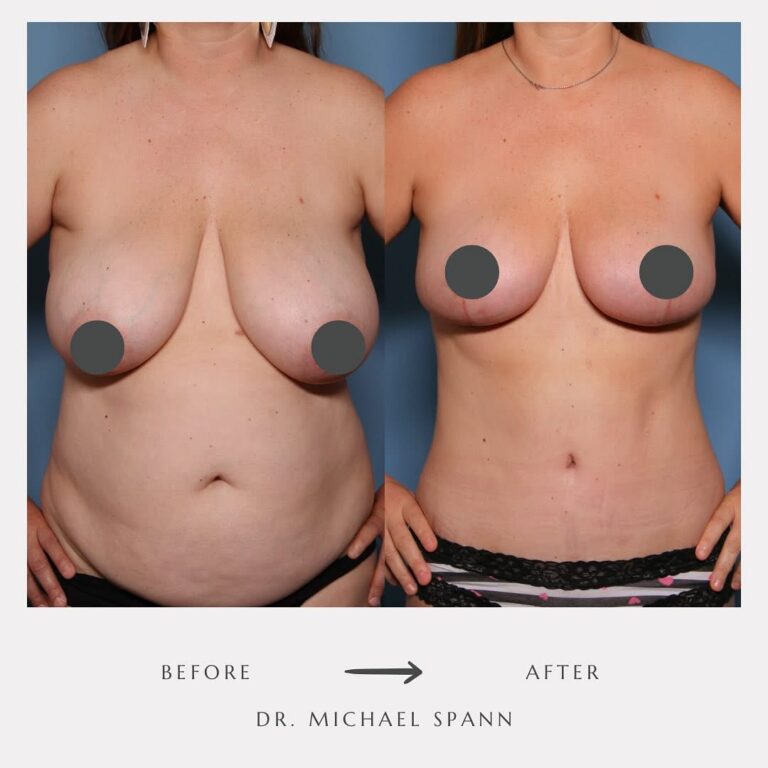
A few months ago, a patient walked into my Little Rock office for her consultation and said something I’ve been hearing more and more often: “I’ve lost 70 pounds on Mounjaro, and I finally feel like myself again—except when I look in the mirror.” She’d done the hard work. The weight was gone. But the loose skin around her midsection made her feel like she was still hiding in oversized clothes.
Her story isn’t unique. Over the past two years, I’ve seen a significant shift in my body contouring consultations. Where I once saw primarily post-bariatric surgery patients, I’m now seeing just as many—if not more—patients who achieved their weight loss through Ozempic, Wegovy, Mounjaro, or one of the other GLP-1 medications that have become so widely prescribed.
This shift prompted a question I found myself asking: Are outcomes different between these two groups? A new study out of Johns Hopkins, published this year in the Aesthetic Surgery Journal, finally gives us some solid data to work with—and frankly, the findings align with what I’ve been observing in my own practice.
The Numbers Tell a Story
The Johns Hopkins team analyzed over 6,200 aesthetic procedures performed between 2016 and 2024. What stood out to me wasn’t just the complication data—it was how dramatically the patient population has shifted.
After the FDA approved Wegovy and Mounjaro, aesthetic procedures among GLP-1 users grew at nearly 54% per year. Meanwhile, procedures among post-bariatric patients actually declined. That tracks with what I’m seeing in consultations. The accessibility of these medications—no surgery, no hospital stay, just a weekly injection—has opened the door for patients who might never have considered bariatric surgery but still struggled with significant weight.
But here’s the part that matters most if you’re considering body contouring: how do these patients do after surgery?
What the Complication Data Actually Shows
After controlling for age, BMI, gender, diabetes, and other factors, the researchers found that GLP-1 patients experienced fewer complications across several important measures. Post-bariatric patients were roughly twice as likely to develop a hematoma, 37% more likely to develop an infection, and 54% more likely to end up in the emergency department after surgery.
I’ll be honest—these numbers didn’t surprise me, especially the hematoma finding. In the operating room, I’ve noticed that post-bariatric patients tend to have larger, more prominent perforating vessels. These require more time and attention to achieve proper hemostasis. I’m meticulous about this regardless of the patient, but with post-bariatric cases, I budget extra time to ensure every vessel is addressed before closing. That careful approach pays off, but the anatomy is simply different.
Beyond the vessels, GLP-1 patients often come to surgery with what I’d call better overall tissue health. Their skin tends to retain more elasticity—it has more “snap back” to it. Post-bariatric patients, particularly those who lost weight rapidly or lost very large amounts, often have skin that’s thinner, less elastic, and more challenging to work with. That difference in skin quality affects everything from how I plan incisions to how I anticipate the tissue will heal and settle over time.
That’s not to say post-bariatric patients can’t have excellent outcomes—they absolutely can, and I operate on them regularly. But it does mean the preoperative optimization conversation is different, and I approach the surgery itself with these tissue considerations in mind.
Why the Difference?
The study authors speculate about a few mechanisms, and some of this resonates with what we understand about wound healing. GLP-1 medications appear to have effects beyond just appetite suppression—there’s emerging research suggesting they may reduce oxidative stress and improve vascularization, both of which matter when you’re asking tissues to heal after surgery.
Interestingly, GLP-1 patients in the study actually had higher HbA1c levels on average, which you’d typically expect to correlate with worse healing. The fact that they still did better suggests something else is going on—possibly a protective effect from the medication itself. We don’t have definitive answers yet, but it’s an area I’m watching closely.
The nutritional piece is worth mentioning too. After bariatric surgery—especially bypass procedures—patients can develop deficiencies in protein, iron, B12, and other nutrients critical for healing. Even when labs come back “normal,” they may be normal-low rather than optimal. GLP-1 patients, because they haven’t had their GI tract rearranged, generally don’t face these same challenges. Better nutrition likely contributes to better skin quality and elasticity going into surgery.
What This Means If You’re Considering Surgery
If you’ve lost significant weight on a GLP-1 medication and you’re bothered by loose skin, this research should be reassuring. Body contouring procedures—abdominoplasty, arm lifts, thigh lifts, breast procedures—appear to be safe and well-tolerated in this population.
That said, there are a few things I discuss with every GLP-1 patient in consultation:
Timing matters. I generally want to see weight stability for at least three to six months before operating. If you’re still actively losing, we’re aiming at a moving target, and you may end up with more laxity than anticipated—or need a revision down the road.
Skin elasticity varies. During your consultation, I’ll assess your skin quality and elasticity. This affects what results are achievable and helps me set realistic expectations. Some patients have skin that will tighten beautifully once the excess is removed; others may need a more aggressive resection. Age, genetics, sun exposure, and how quickly you lost weight all play a role.
Medication management around surgery. The American Society of Anesthesiologists recommends holding weekly GLP-1 medications for a week before surgery and daily formulations on the day of surgery. This is because these drugs slow gastric emptying, which increases aspiration risk under anesthesia. It’s a straightforward precaution, but an important one.
Your goals drive the plan. Some patients want comprehensive transformation—a full tummy tuck, maybe combined with breast work. Others want to address one area that bothers them most. There’s no single right answer. What matters is that we’re aligned on expectations and I can realistically deliver what you’re hoping for.
The Bigger Picture
I think we’re in the early chapters of a significant shift in body contouring. GLP-1 medications have made substantial weight loss achievable for millions of people who, for various reasons, weren’t candidates for or interested in bariatric surgery. And as this population grows, plastic surgeons are seeing more of these patients in consultation.
The good news, as this Johns Hopkins data suggests, is that we can help them safely. Body contouring after GLP-1 weight loss isn’t just cosmetic—for many patients, it’s the final step in a transformation that affects how they move through the world, how they dress, how they feel in their own skin.
If that resonates with you, I’d encourage you to schedule a consultation. We can talk through your goals, look at what’s realistic, and figure out whether surgery makes sense for where you are in your journey.
Little Rock Plastic Surgery has locations at Baptist Hospital Little Rock and CARTI Surgery Center. Call us at 501 219-8000 to schedule your body contouring consultation.
Reference: Khong J, Suresh R, Park KE, Soltanian H. New Contours, Different Risks: A 9-Year Comparison of Trends and Postoperative Complications in Patients Undergoing Aesthetic Surgery With Previous Bariatric Surgery Vs Glucagon-Like Peptide 1 Receptor Agonist Use. Aesthetic Surgery Journal. 2025;45(11):1159-1165.
Disclaimer: This blog post is for educational purposes only and does not constitute medical advice. Individual results vary, and the best treatment plan depends on your unique circumstances.